Fareham History: Forts, Red Bricks and Local Landmarks
A readable history of Fareham, from its creek and High Street to Fareham Red bricks, the Palmerston forts, HMS Collingwood and Henry Cort, with sources linked.
Fareham's history runs from a Domesday-era creek settlement through brickmaking (Fareham Reds, which Fareham Borough Council says were used for the Royal Albert Hall) to the 1860s Palmerston forts and HMS Collingwood, commissioned 10 January 1940. Westbury Manor Museum closed to the public from 4 November 2024.
How old is Fareham, and why is it on a creek?
Fareham sits at the head of Fareham Creek, and its history is tied to that water. Wikipedia's Fareham article notes that the town appears in the Domesday Book of 1086 as "Ferneham", and that the creek was home to the Bishop of Winchester's mills. It adds that commercial port activity continued there until the 1970s.
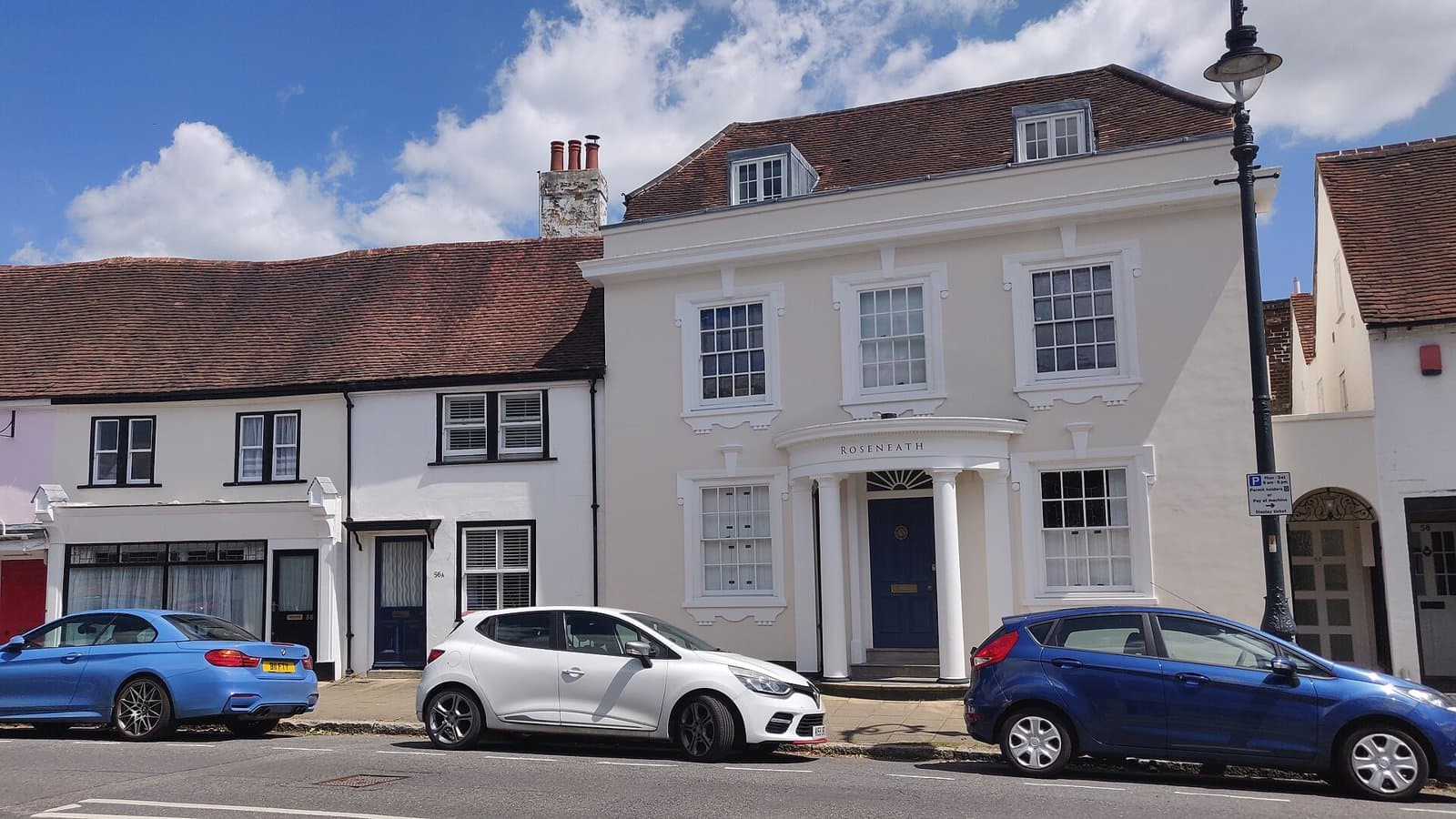
The High Street and its Georgian buildings
Fareham's High Street is the historic core of the town. Fareham Borough Council's conservation area page says the High Street was designated a conservation area in 1969, was recognised as being of outstanding architectural and historic interest in 1977, and was extended in 1980 to take in more of the Wallington river valley. The council describes the area as the historic core of the town, with a medieval burgage plot layout along the High Street, and it also takes in St Peter and St Paul's Church, Union Street and parts of Wickham Road.
Wikipedia's Fareham article describes the High Street as featuring historic Georgian buildings. If you want to look at individual buildings, the National Heritage List for England at Historic England is the official record of what is listed.
Fareham Red bricks and the Royal Albert Hall
Brickmaking is the part of Fareham's story most people know. Fareham Borough Council's Discover Fareham page says Fareham has a long history of brickmaking and that the local red bricks, known as "Fareham Reds", were used for many famous buildings, including the Royal Albert Hall (1871) in London.
Wikipedia's Fareham red brick article repeats the Albert Hall claim, citing a 1987 book by David W. Lloyd, Historic towns of south-east England. It also names Knowle Hospital, formerly the Hampshire County Lunatic Asylum, as a building made with the bricks.
For context only, the council's page also mentions the former Bursledon Brickworks, built in 1897, which has a southern part converted into a museum of brickmaking. Bursledon is outside Fareham borough, so it is a pointer to the wider story rather than a Fareham site.
The Palmerston forts: Fort Nelson, Fort Fareham and Fort Wallington
In the 1860s the government built a ring of forts to defend Portsmouth against a feared invasion, and they are known as the Palmerston forts after the Prime Minister of the time. Wikipedia's Fort Nelson article says a Royal Commission was set up in 1859, that Fort Nelson was built between 1860 and 1867, and that it was not fully armed until the 1890s. It was disarmed in 1907, abandoned in the 1950s, opened to the public in 1994 and became part of the Royal Armouries in 1995. Wikipedia lists it as Grade I listed, from 22 December 1971.
The Royal Armouries now runs it as a museum on Portsdown Hill Road, and its page says Fort Nelson is free to enter. Opening days change between term time and school holidays, so check the Royal Armouries site for current times. The postcode on that page is PO17 6AN. Fort Nelson also runs events through the year, which we list in our Fareham events calendar.
Fort Fareham is closer to the town. Wikipedia's Fort Fareham article says it was built between 1861 and 1868 at a cost of £104,557 and was in active military service until 1902. It was later used as a barracks and as an Anti-Aircraft Operations Room. In 1965 it was transferred to Fareham Urban District Council. It has been a Grade II listed building since 1976, and the parade ground is now covered by Fort Fareham Business Park, with the casemates converted into industrial units.
HMS Collingwood
HMS Collingwood is a Royal Navy training establishment in Fareham. Wikipedia's HMS Collingwood article) says it was commissioned as the fourth HMS Collingwood on 10 January 1940, initially to train "hostilities only" seamen,. It is today the lead establishment of the Navy's Maritime Warfare School.
Cams Hall
Cams Hall is a mansion overlooking Portsmouth Harbour. Wikipedia's Cams Hall article says it was built around 1770 by the architect Jacob Leroux and was bought in 1776 by Peter Delmé. It was heavily damaged on 14 July 1950 when ammunition barges exploded at Bedenham pier, and was restored by 1996 at a cost of £4 million. Since 2000 it has offered office space, meeting rooms and event spaces. Check with the current operator about access.
Westbury Manor Museum
Westbury Manor Museum, at 84 West Street, was run for the council by Hampshire Cultural Trust. A Fareham Borough Council press release said it would close permanently to the public from Monday 4 November 2024.
Henry Cort and the Fontley Works
Henry Cort was an ironmaster whose rolling and puddling methods changed how wrought iron was made. Wikipedia's Henry Cort article says that by 1783 he was working at the Fontley Works, which he had renamed from Titchfield Hammer, and that he took out patents in 1783 and 1784. After the death of his financier Adam Jellicoe in 1789 he was declared bankrupt. He died on 23 May 1800 and is buried at St John-at-Hampstead in London. Wikipedia's Fareham article adds that a sculpture park installed in 2001 commemorates him.
Share this article